Boston Terrier Training From Day One
Boston Terriers are quick learners with a mind of their own. Here is how to build calm manners, good habits and a close bond using patient, reward-based methods.
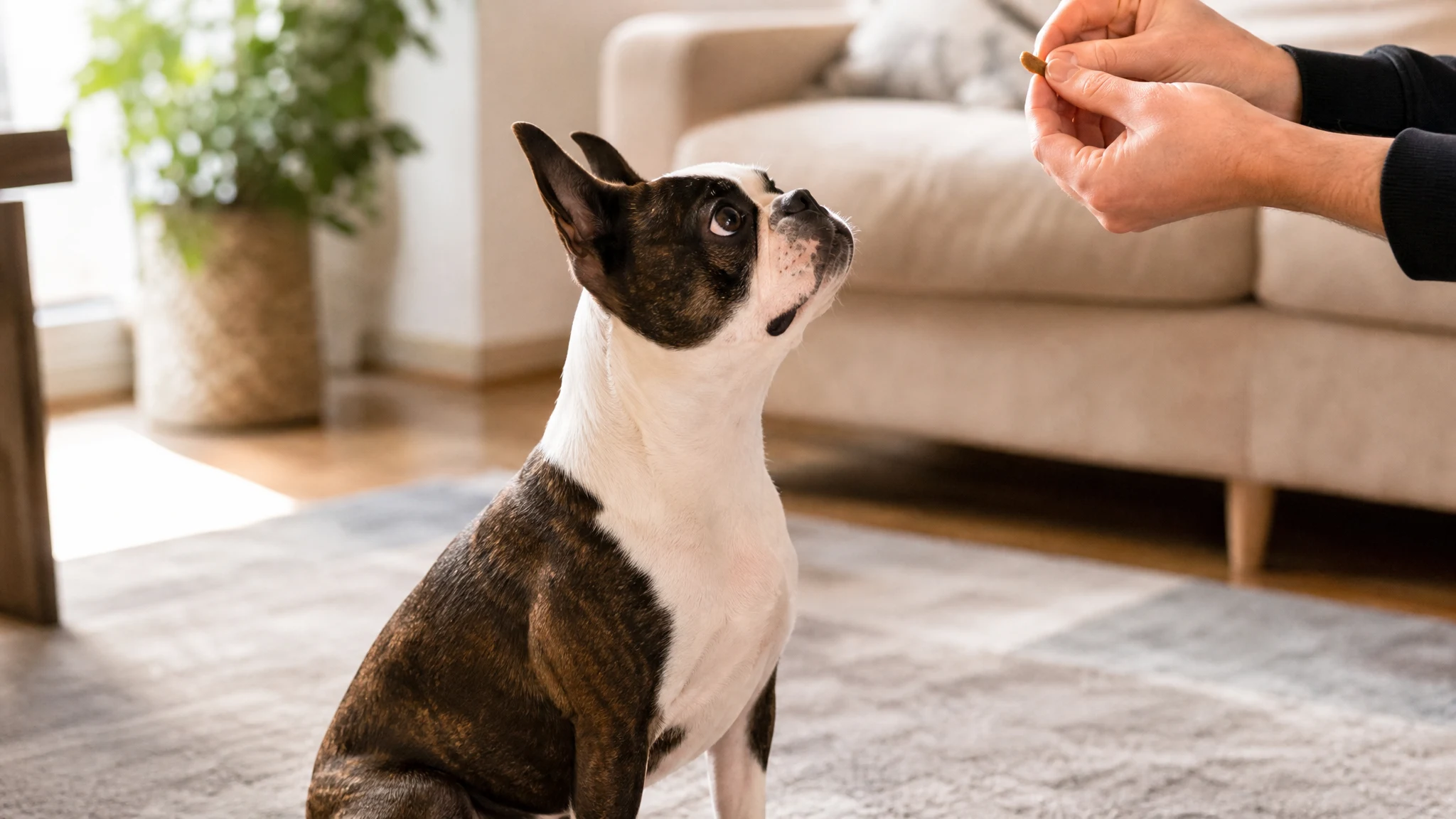
The Boston Terrier at a glance
From the AKC breed page and the national breed club, as they state it.
| Origin | Originated in Boston, USA. BTCA history page says the breed resulted from a cross between the English Bulldog and the white English Terrier; a dog named Judge, owned by Robert C. Hooper of Boston, is the forebear of most present-day Boston Terriers. source |
| Bred for | Companion dog. The parent club says the breed has been bred to be companions. The BTCA history page does not state any other working role. source |
| Height | Shoulder height of 10 to 12 inches (PetMD). The AKC figure could not be opened. source |
| Weight | 12 to 25 pounds (PetMD). The AKC standard weight classes could not be opened (the BTCA standard PDF was unreadable). source |
| Life expectancy | Parent club: average around 11 to 13 years, and a healthy, well-kept Boston can live well into the teens. PetMD also says 11 to 13 years. source |
| Energy | Very active and playful (parent club wording). The AKC numeric energy rating could not be opened. source |
| Trainability | Parent club describes the breed as highly intelligent and quick to learn. PetMD says they respond quickly to positive reinforcement but can have a mind of their own. The AKC trainability rating could not be opened. source |
| With children | Parent club says they do well around children, adults and even other pets. source |
| With other dogs | Parent club says they do well around other pets generally; it does not single out other dogs. The AKC rating could not be opened. source |
| Shedding | Yes, they shed, but only a small amount; weekly brushing keeps it under control. source |
| Temperament | Intelligent, quick learners, companion dogs that need human contact and are not outdoor dogs. PetMD also calls them happy-go-lucky and sociable. source |
Boston Terrier Training Guides
Practical guides for the first weeks and beyond, built around rewards, short sessions and the way this breed lives.
Puppy
From the first night home to adolescence: a Boston Terrier puppy's training.
Training basics
Potty, crate and leash training, written for Boston Terriers.
- Are Boston Terriers Easy to Train? Temperament and Trainability FAQ
- Leash Training a Boston Terrier: Pulling, Lunging and Loose-Leash Walking
- Crate Training a Boston Terrier and Preventing Separation Anxiety
- How to Potty Train a Boston Terrier Puppy
- Boston Terrier Training: The Complete Guide for Owners
Behavior
The Boston Terrier problems owners ask about most, and the instincts behind them.
Exercise and jobs
How much a Boston Terrier needs to do, and the sports and work the breed was made for.
Boston Terrier Questions Answered
Are Boston Terriers easy to train?
The Boston Terrier Club of America describes the breed as highly intelligent and quick to learn. PetMD adds that Bostons respond quickly to positive reinforcement but can have a mind of their own. Expect fast progress with rewards and games, and some stubborn moments that call for patience rather than force.
When should I start training my Boston Terrier?
The Boston Terrier Club of America says basic training is needed, and notes that without it the breed can jump up and nip during play. Starting early with sit, loose-leash walking and calm greetings gives those habits a better outcome. Individual dogs vary, so ask a local trainer who uses rewards.
How much exercise does a Boston Terrier need?
PetMD suggests several short bursts of exercise through the day, with extra care in heat and humidity because of the flat face and breathing. The parent club calls the breed very active and playful. Ask your veterinarian what activity level suits your dog.
Can a Boston Terrier be left alone?
The Boston Terrier Club of America says the breed needs human contact, is not an outdoor dog, and will languish without company. Plan for training that builds comfort with short, gradual absences, and talk to a reward-based trainer if your dog struggles when left alone.
What health checks should I ask a breeder about?
OFA lists a Respiratory Function Grading exam for brachycephalic airway syndrome and a Spine Database for vertebral anomalies that applies to Boston Terriers. The full list of recommended tests should come from the Boston Terrier Club of America, so check with the club and ask any breeder for results. Your veterinarian handles health questions.
Boston Terrier health screening
Tests the breed's club and OFA recommend for breeding dogs. Ask a breeder for results.
| Recommended screens | OFA Respiratory Function Grading System (RFGS) exam for brachycephalic obstructive airway syndrome (BOAS). OFA's April 2026 update lists Boston Terrier as eligible, but the same page's minimum-age section names only Pugs, Bulldogs and French Bulldogs. | OFA Spine Database (vertebral anomalies), which applies to… source |
| Health issues the club notes | Eye problems: glaucoma, cataracts, dry eye, corneal ulcers (PetMD) | Brachycephalic airway syndrome (PetMD) | Patellar luxation (PetMD) | BTCA notes the breed can be prone to health problems that need expensive veterinary care source |
| National breed club | Boston Terrier Club of America (BTCA), https://bostonterrierclubofamerica.org/ source |
General training information. Every dog is an individual; for health or behavior concerns, see your veterinarian.