Boston Terrier Training: The Complete Guide for Owners
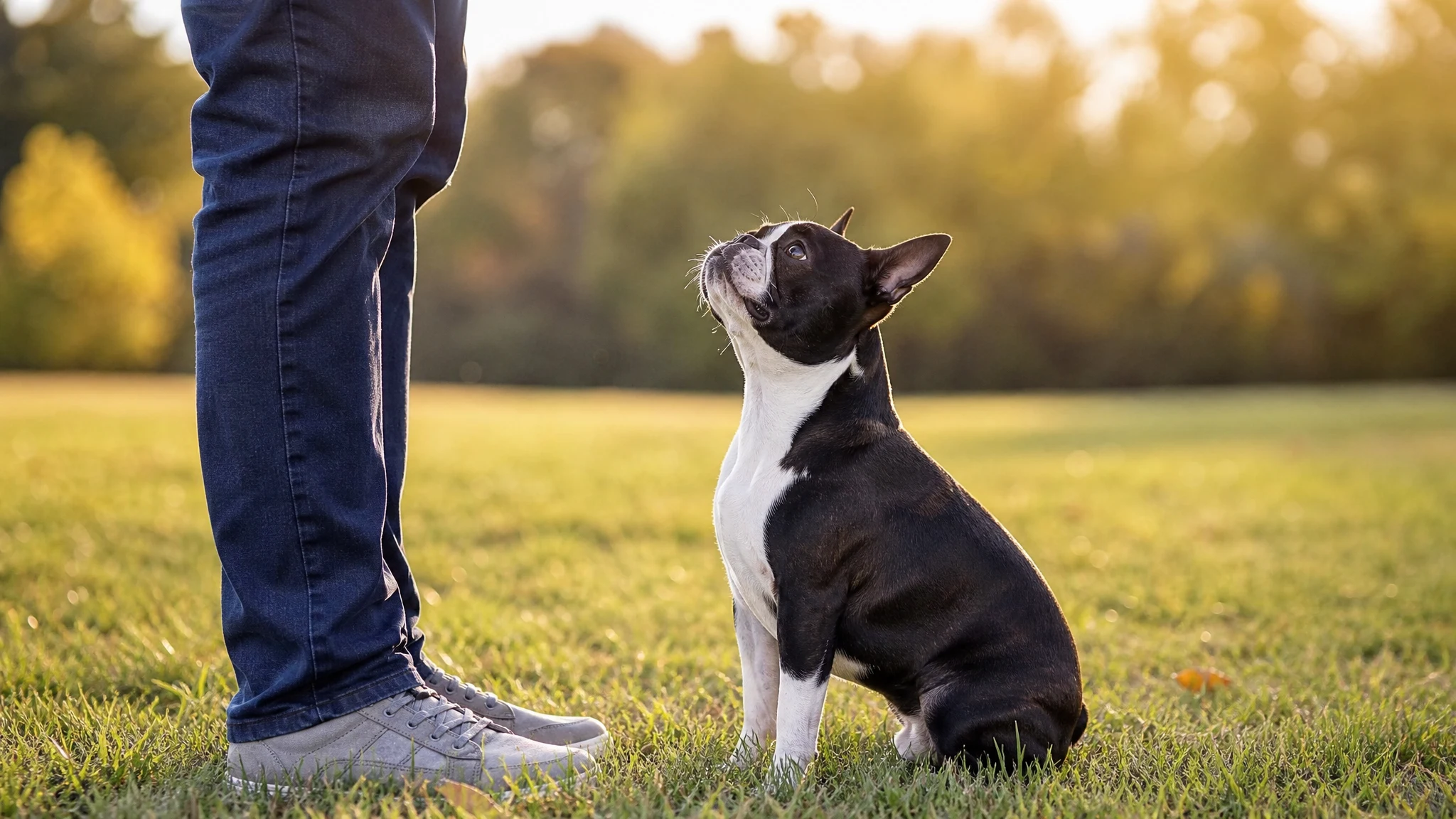
General training information. Every dog is an individual; for health or behavior concerns, see your veterinarian.
A Boston Terrier is quick, social and funny, and it will happily learn almost anything you teach it. It will also learn things you did not mean to teach, like jumping on guests or nipping at your hands during play. Good Boston Terrier training is mostly about getting ahead of that second list.
This guide covers how to train a Boston Terrier from the first week home through adulthood. It explains what the breed was made for, which motivators work, how to balance exercise with a flat face, and which problems to plan for. Every dog is an individual, so treat the breed notes as a starting point and let your own dog set the pace.
Key Takeaways
- The Boston Terrier Club of America (BTCA) describes the breed as intelligent, quick to learn and bred as a companion, so training works best when it builds the bond.
- PetMD says Bostons respond quickly to positive reinforcement but can have a mind of their own. Patience and games help.
- The BTCA says basic training is needed, partly because jumping up and play nipping are common without it.
- Because of the flat face, PetMD advises several short bursts of exercise and extra care in heat and humidity.
- The BTCA says these dogs need human contact. Long stretches alone are a training problem as well as a welfare one.
- Use reward-based methods only. Questions about breathing, eyes, joints or pain belong with your veterinarian.
Table of Contents
- What the Boston Terrier Was Bred For, and Why It Matters
- The Training Principles That Fit This Breed
- Training Stages: Puppy to Adult
- Motivation That Works
- Exercise and Mental Work
- Challenges to Plan For
- Health, Comfort and Training
- A Simple Training Plan to Start With
What the Boston Terrier Was Bred For, and Why It Matters
Training goes better when you understand what a dog was shaped to do. For this breed, the answer is refreshingly simple.
A Boston-born companion
According to the Boston Terrier Club of America, the breed originated in Boston and resulted from a cross between the English Bulldog and the white English Terrier. The club's history page names a dog called Judge, owned by Robert C. Hooper of Boston, as the forebear of most present-day Boston Terriers.
The parent club says the breed has been bred to be companions. Its history page does not describe any other working role. That is useful for owners. You are not trying to manage a dog with a herding, hunting or guarding job it feels it must do. You are living with a dog whose main purpose is to be with people.
What the parent club says about temperament
The BTCA describes Boston Terriers as intelligent and quick learners, and as companion dogs that need human contact. The club also says they are not outdoor dogs and will languish without human contact. PetMD adds that they are happy-go-lucky and sociable. The club describes them as very active and playful, and says they generally do well around children, adults and even other pets.
Individual dogs vary, so read these as tendencies, not promises. Still, they point to a few training truths:
- Your attention is the main reward. A dog bred for company will work hard for praise, play and closeness.
- Isolation undermines training. A Boston left alone for long stretches is likely to invent its own entertainment.
- Quick learners learn bad habits quickly too. If jumping gets a hug, jumping becomes a habit.
What the club says about training itself
The parent club states that basic training is needed. It specifically notes jumping up and play nipping when basic training is missing. PetMD says the breed responds well to positive reinforcement, and that patience and games help with its independent streak. Those two sources shape everything below.
The Training Principles That Fit This Breed
Reward-based training is the approach recommended by the American Veterinary Society of Animal Behavior (AVSAB), and it suits a sociable, sensitive-to-company dog like the Boston Terrier. Here is how to apply it.
Reward what you want, manage what you do not
Catch your dog doing something right and pay for it with a treat, a toy or attention. Prevent the mistakes you cannot reward. Baby gates, a crate or pen, and closed doors do much of the work. A dog that never gets to rehearse stealing socks never learns that stealing socks is fun.
Keep sessions short and playful
Because PetMD points to games as a way around the breed's independent streak, treat training as play. Aim for a few minutes at a time, several times a day. End while your dog is still keen. If your Boston wanders off, the session was probably too long or too hard.
Be consistent across the household
A smart dog notices every loophole. If one person lets the dog on the couch and another does not, you are teaching it to test the rules. Agree on cue words, house rules and rewards before the dog comes home.
Methods to avoid
Do not use shock, prong or choke collars, and do not use alpha rolls, scruffing or any dominance-based handling. These methods risk fear and stress, and they damage the trust a companion breed depends on. A harness and a flat or front-clip setup, paired with rewards, keeps walks comfortable. A harness also avoids pressure on the throat, which is a sensible choice for a flat-faced dog whose breathing is already a health topic.
Training Stages: Puppy to Adult
Breed sources do not give a Boston-specific timetable for puppy development, so check with your veterinarian and your breeder or rescue about timing, especially for vaccines and when public outings are safe. The stages below follow the general order in which most owners teach skills.
Stage 1: The first days at home
Your goal is calm, safe and predictable. Set up a sleeping area, a place for water, and a toilet spot outside. Start these right away:
- Name recognition. Say the name, reward eye contact. Repeat in short bursts.
- Crate or pen comfort. Toss treats in, feed meals there, and keep the door open at first. Never use it as punishment.
- Handling. Gently touch paws, ears, mouth and face while giving treats. This helps with grooming and vet visits later.
Stage 2: Housetraining
Take your puppy out after sleeping, eating, drinking and play, and any time it starts sniffing and circling. Reward on the spot, right after it finishes outside, not when you are back indoors. Supervise closely indoors. If you cannot watch, use the crate or pen.
Accidents happen. Clean them with an enzyme-based cleaner, and do not scold. A dog that is punished for going in front of you often learns to hide instead of learning where to go.
Remember that the BTCA does not consider this an outdoor breed, so you may need a plan for bad weather. Many owners pick a consistent spot and bring a coat or umbrella rather than skip trips outside.
Stage 3: Socialization and early manners
Introduce your puppy to everyday sights, sounds, surfaces and calm people in a gradual, positive way. The aim is a relaxed dog, not an overwhelmed one. Let your puppy approach new things at its own speed, and pay for curiosity and calm. Ask your veterinarian when it is safe to meet other dogs and visit shared spaces.
At this stage also teach the skills that stop the breed's known early problems:
- Sit for greetings. Since the parent club flags jumping up, make four paws on the floor the way to get attention.
- Bite inhibition and redirection. Since the club also flags play nipping, hand your puppy a toy the moment teeth touch skin. If mouthing continues, calmly end the game for a short break, then restart.
Stage 4: Core cues
Build the basics with lures and rewards, one at a time:
- Sit. Move a treat over the nose and back. Mark the moment the rear touches down.
- Down. From a sit, lower the treat to the floor between the paws.
- Come. Start in a hallway. Say the cue in a happy voice, back away, and reward lavishly. Never call your dog to end the fun or to scold.
- Stay. Start with one second and add time, then distance, then distractions, in small steps.
- Leave it and drop it. Trade a treat for the item. Do this often so that giving things up feels like a good deal.
- Loose-leash walking. Reward position at your side. Stop moving when the leash tightens and go on when it loosens.
Practice each cue in new rooms before you ask for it outdoors. Dogs do not automatically carry a skill from the kitchen to the sidewalk.
Stage 5: Adolescence
Most dogs go through a phase where cues they knew well seem to vanish. This is normal. Go back a step, shorten sessions, raise the reward value, and keep exercise regular. PetMD's note that the breed can have a mind of their own is a good thing to hold in your head here. It is not defiance to punish. It is a young dog who needs clearer, more rewarding practice.
Stage 6: Adulthood
The BTCA gives an average life expectancy of around 11 to 13 years, and says a healthy, well-kept Boston can live well into the teens. That is a long time to enjoy a trained dog, so keep going. Refresh cues, add new tricks, and keep house rules steady. Adult training is mostly maintenance and fun: reward good habits so they stay strong, and keep adding new challenges so your dog stays mentally engaged.
Motivation That Works
Finding the right reward matters more than finding the right command. For a companion dog, you have more choices than food alone.
Food rewards
Small, soft, easily swallowed treats keep training moving. Use a higher-value treat for harder tasks like recall around distractions, and a plain one for easy cues at home. Count treats as part of daily food, and ask your veterinarian about portions if weight is a concern.
Play and toys
The parent club calls the breed very active and playful, so a short game of tug or fetch is often a powerful reward. Choose toys that are comfortable for a short muzzle, and keep play controlled. Teach a cue to start the game and a cue to stop it.
Attention and affection
Since the BTCA stresses that these dogs need human contact, your praise, voice and touch carry real weight. Use them deliberately. Reward calm behavior with attention instead of giving attention only when your dog is jumping, barking or pawing at you.
Real-life rewards
Let the dog earn what it already wants: the door opening, the leash going on, the dinner bowl landing. A quick sit before each makes manners part of daily life without extra effort.
Working with the independent streak
PetMD says patience and games help here. Build in choices, vary the routine, and make the task a puzzle your dog can win. If your Boston loses interest, check three things: the reward, the distractions and the length of the session.
Exercise and Mental Work
A tired dog is easier to train, but with this breed the way you tire it matters.
Short bursts, not long marches
PetMD recommends several short bursts of exercise through the day, with extra care in heat and humidity because of the breed's breathing. Think a few short walks, a game in the yard and some indoor play, not one long hike. Pick the cooler parts of the day in warm months, carry water, and stop at the first sign your dog is struggling to breathe or cool down. Contact your veterinarian if you are worried about how your dog handles exertion.
Mental work counts
With a quick-learning dog, ten minutes of thinking can be as satisfying as a long walk. Try these:
- Scatter feeding. Toss a handful of kibble in the grass or on a mat and let your dog sniff it out.
- Food puzzles and snuffle mats. Use them for some meals.
- Hide and seek. Have someone hold your dog while you hide, then call it to find you.
- Trick training. Spin, bow, shake, and "find the toy" are all easy to teach with rewards.
- Name the toys. Teach your dog the names of two or three toys and ask it to fetch one by name.
Company is part of the plan
Because the club says these dogs languish without human contact, build time together into the routine. Let your Boston share the room while you work, join you on errands where it is safe, and take part in family life. Dogs that get enough company are usually easier to settle when you do leave.
Other activities
Sources available for this guide do not list formal dog sports for the breed, so check with the Boston Terrier Club of America or a local club about activities in your area. Whatever you try, keep the breed's heat and breathing limits in mind and let your veterinarian guide how hard to push.
Challenges to Plan For
Being honest about the hard parts makes them easier to handle. These are the ones the sources point to, along with practical fixes.
Jumping up
The BTCA notes jumping up without basic training. Greetings are exciting, and a jump gets attention fast.
- Turn away or step back when paws leave the floor.
- Reward the instant all four feet touch down, then add a sit.
- Ask visitors to follow the same rule. Put your dog on a leash or behind a gate until it can greet calmly.
Play nipping
The parent club also flags play nipping. It is common in young dogs, but it should not continue by default.
- Keep a toy within reach and swap it for skin the moment teeth touch.
- Pause play briefly if the biting continues, then resume with calmer games.
- Avoid rough hand games, which teach your dog that hands are toys.
A mind of its own
PetMD says Bostons can have a mind of their own. Expect the occasional dog that decides your cue is optional. Raise the reward, shorten the session, practice somewhere quieter, and never turn to force. Calm persistence works better than frustration.
Heat, humidity and effort
PetMD flags heat and humidity as a risk with exertion because of the flat face. For training, that means keeping sessions short in warm weather, using indoor practice on hot days, and avoiding intense chasing games when it is muggy. Teach a calm settle cue early. It helps you cool your dog down and gives an excited dog a way to relax.
Loneliness and separation
A dog that needs human contact may find solo time hard. Build alone-time gradually. Start with a few seconds behind a gate, offer a chew or stuffed toy, and increase time as your dog stays relaxed. Keep departures and returns low-key. If your dog panics, destroys things or cannot settle, talk to your veterinarian, who can rule out medical causes and refer you to a qualified behavior professional.
Living with other pets and children
The BTCA says Boston Terriers do well around children, adults and even other pets. That is a general statement, and it does not name other dogs specifically. Introduce animals slowly, supervise young children, and teach kids to be gentle and to leave a resting dog alone.
Health, Comfort and Training
Health affects behavior. A dog in discomfort may snap, avoid exercise, or stop responding. This section is about how health topics connect to training, not about diagnosing anything. Your veterinarian is the right person for every health question.
Conditions to know about
PetMD lists eye problems (glaucoma, cataracts, dry eye and corneal ulcers), brachycephalic airway syndrome and patellar luxation among the breed's common health issues. The BTCA notes the breed can be prone to health problems that need expensive veterinary care. If your dog seems to struggle for breath, squints, paws at its eyes, or limps or skips on a hind leg, book a veterinary visit rather than assuming it is a behavior issue.
Health screening and choosing a breeder
The Orthopedic Foundation for Animals (OFA) runs a Respiratory Function Grading System exam that looks at brachycephalic obstructive airway syndrome, and its April 2026 update lists the Boston Terrier. OFA also has a Spine Database for vertebral anomalies, which applies to Bulldogs and Boston Terriers. The BTCA says it offered free BOAS testing at its 2024 National and recognizes members who complete recommended health testing and submit results to OFA. Ask any breeder which tests they have done and for the results, and check with the BTCA and OFA for current requirements.
Making training physically comfortable
- Use a well-fitted harness instead of pressure on the neck.
- Keep practice areas cool and shaded in warm weather.
- Watch for tiring, noisy breathing or reluctance, and stop if you see them.
- Teach stairs and jumping down from furniture with care, and ask your vet about joint concerns.
Grooming is part of the routine too. The BTCA says Boston Terriers shed only a small amount, and weekly brushing keeps it under control. Use brushing sessions as handling practice with treats.
A Simple Training Plan to Start With
If this much information feels like a lot, start small. Here is a framework you can adjust.
The first week
- Set up a crate or pen, a toilet spot and a daily schedule.
- Practice name response, handling and crate comfort in short sessions.
- Start rewarding four paws on the floor for every greeting.
The first month
- Teach sit, down and come in quiet rooms.
- Offer a toy in place of hands every time mouthing starts.
- Begin gentle, positive exposure to everyday sounds and surfaces, as your veterinarian advises.
- Build short periods of alone time.
The months after
- Add stay, leave it, drop it and loose-leash walking.
- Proof cues in new places with mild distractions.
- Introduce puzzle toys and tricks for mental work.
- Keep exercise in short bursts, and avoid hot, humid hours.
A daily rhythm that works
Spread three to five short training moments through the day: one before breakfast, one at a walk, one during play, and one in the evening. Tie each to something your dog already enjoys. Keep notes on what rewards worked and where your dog struggled, so you can adjust next week.
When to get help
If your dog shows fear, growling over food or toys, or intense distress when left alone, do not wait it out. Start with your veterinarian to rule out pain or illness, then look for a trainer or behavior professional who uses reward-based methods and who will explain their approach before you begin. Be wary of anyone who recommends shock, prong or choke collars or dominance techniques.
Final Thoughts
The Boston Terrier was bred to be a companion, and that is both the secret and the challenge of training one. Your dog wants to be with you, learns quickly and enjoys games. It also wants your attention badly enough to jump, nip and test the rules to get it. Put your effort into early manners, short and playful sessions, and rewards your dog truly values. Plan for heat, humidity and the breed's breathing, and keep your veterinarian involved in anything health related.
Be patient on the days when your Boston seems to have a mind of its own. With steady, kind practice, most owners end up with a dog that is a joy to live with.
Sources
- Boston Terrier Club of America, About Boston Terriers
- Boston Terrier Club of America, FAQs
- Boston Terrier Club of America, Boston Terrier History
- Boston Terrier Club of America, Health
- PetMD, Boston Terrier breed page
- Orthopedic Foundation for Animals, Respiratory Function Grading System
- Orthopedic Foundation for Animals, Spine Database