Crate Training a Boston Terrier and Preventing Separation Anxiety
General training information. Every dog is an individual; for health or behavior concerns, see your veterinarian.
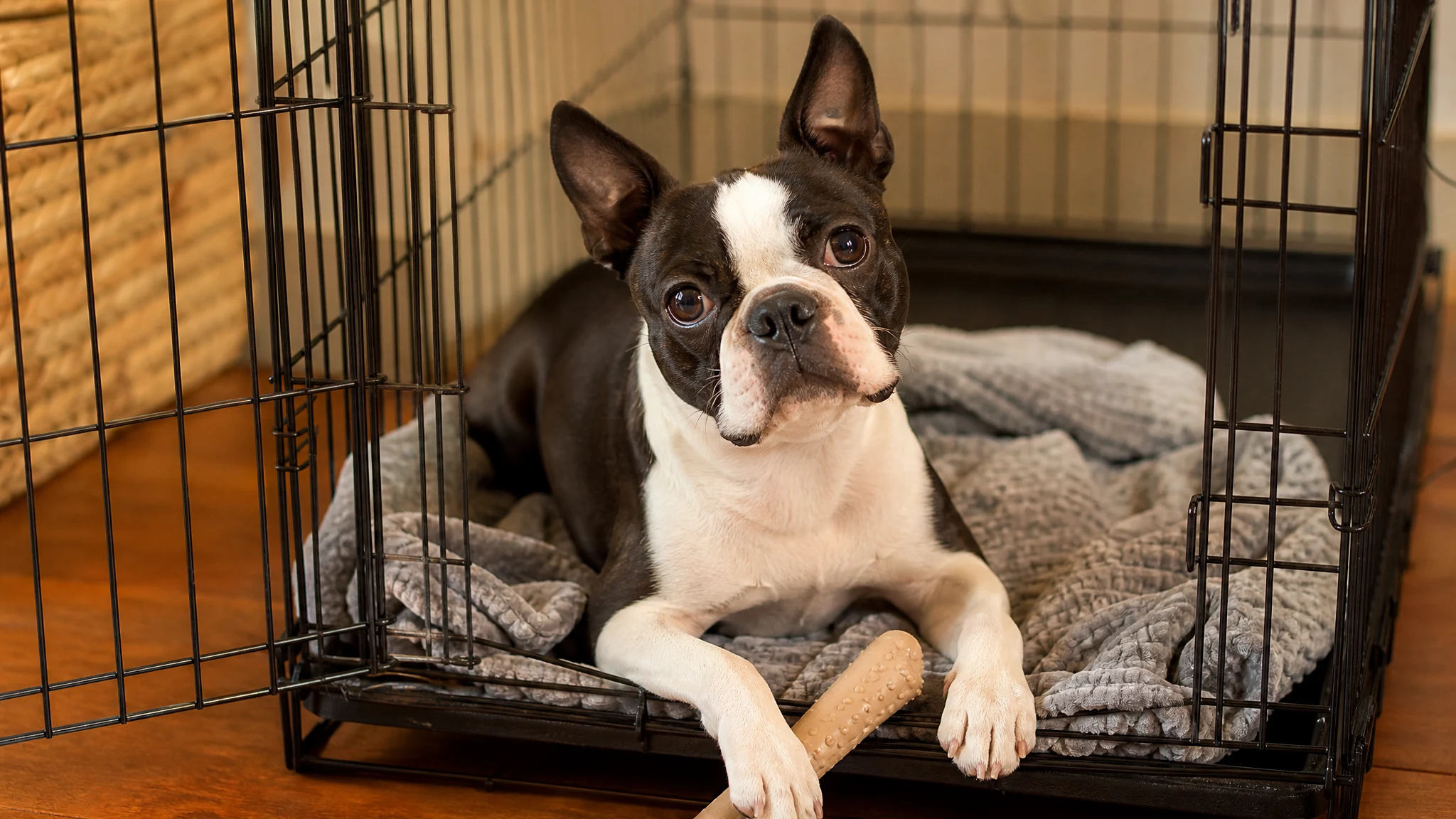
A crate can be a calm, safe den for a Boston Terrier. It can also become a place of panic if it is introduced badly. The difference usually comes down to pacing, patience and what your dog learns to expect when you walk away.
This guide walks through boston terrier crate training one step at a time. It also covers how to build alone time so you lower the chance of boston terrier separation anxiety taking hold. For the wider picture of manners and basic cues, see our complete guide to Boston Terrier training.
Why Bostons Need Thoughtful Alone-Time Training
The Boston Terrier Club of America describes the breed as companion dogs that need human contact and are not outdoor dogs. The club also says they will languish without that contact. That is the heart of the issue. A dog bred to be with people can find solitude hard, so alone time has to be taught gradually.
The club also calls the breed highly intelligent and quick to learn. PetMD adds that Bostons respond quickly to positive reinforcement but can have a mind of their own. In practice, that means rewards and games work well, and short, upbeat sessions beat long, stern ones. Every dog is an individual, so your dog may move faster or slower than the steps below.
What You Need
- A crate with a secure door and good airflow (wire or hard-sided, your choice)
- A washable crate pad or blanket
- Small, soft treats your dog loves, cut into tiny pieces
- One or two safe chew or food-dispensing toys that suit your dog's size and chewing style
- A cover or light blanket for part of the crate, if your dog settles better in a dimmer space
- A pen or gated area for short breaks from the crate
- A phone or camera so you can watch how your dog behaves when you are out of sight
- A timer, so you can keep practice sessions short and predictable
Choosing the Right Crate Size for a Boston Terrier
PetMD lists the breed at 10 to 12 inches at the shoulder and 12 to 25 pounds. That is a wide weight range, so your own dog's size matters more than the average. Puppies will also grow.
Use this simple fit test instead of a single number:
- Your dog should be able to stand up without ducking the head.
- Your dog should be able to turn around easily.
- Your dog should be able to lie down fully stretched out.
- There should not be room for a separate sleeping corner and a bathroom corner.
Measure your dog's height at the shoulder and length from nose to base of tail, then compare with the crate maker's own sizing chart. If you are raising a puppy, ask the brand or your veterinarian whether the crate comes with a divider so you can buy once and adjust as your dog grows.
Because of the flat face, Bostons can struggle with heat and humidity, a point PetMD stresses. Place the crate away from sunny windows, heaters and stuffy rooms, and choose one with plenty of ventilation.
Step-by-Step: Crate Training Your Boston Terrier
Step 1: Make the Crate a Pleasant Place
Set the crate in a living area where the family spends time. Put the pad inside, prop the door open and leave it alone. Toss a few treats in and let your dog wander in and out.
Do not push, lure with force or shut the door yet. The goal is for your Boston to decide the crate is a rewarding spot.
Step 2: Feed Meals Near and Then Inside the Crate
Start by placing the food bowl just outside the door. Over several meals, move it a little further in until your dog is eating at the back. Keep the door open at this stage.
If your dog hesitates, go back one step. Moving slowly now saves time later.
Step 3: Add a Cue and Close the Door for a Moment
Pick a short cue such as "crate" or "bed." Say it once, toss a treat inside and praise as your dog steps in. When your dog is relaxed, close the door for a second or two, reward through the gaps and open it before any fuss starts.
Build up in small increments. A few seconds, then ten, then thirty. Always open the door while your dog is calm, so calm is what gets rewarded.
Step 4: Stay Nearby While Your Dog Settles
Once your dog is comfortable with the door shut, give a chew or food toy and sit close by. Read a book, scroll your phone and act boring. This teaches your Boston that being in the crate is not a signal that something exciting or scary is about to happen.
Then start taking a step away, returning before your dog worries. Move across the room, then briefly out of sight, then back. Keep each trial short and easy.
Step 5: Build Alone Time in Small Pieces
Alone-time practice is the part that protects against separation distress. Think of it as a ladder:
- Leave the room for a few seconds and return calmly.
- Stretch to thirty seconds, then a minute, then a few minutes.
- Step outside and come right back in.
- Take short trips to the mailbox or car.
- Only then try longer absences.
Mix up the lengths so your dog cannot predict a pattern. If your dog whines, cries hard or scrambles, you went up the ladder too fast. Drop back to the last easy step and stay there for several sessions.
Step 6: Keep Departures and Returns Low-Key
Big goodbyes and wild reunions teach your dog that your coming and going is a major event. Give a chew, say a calm phrase and leave. When you return, wait until your dog settles before greeting. Quiet comings and goings help alone time feel ordinary.
Step 7: Exercise and Play Before Crate Time
The parent club calls the breed very active and playful. PetMD suggests several short bursts of exercise through the day. A short game of tug or fetch, a sniffing walk and a few quick cue practices can take the edge off before crate time. Keep it gentle in hot or humid weather.
Signs of Separation Distress
Watch for patterns, not one-off moments. A dog that fusses for a minute and then settles is learning. A dog that cannot settle at all needs a slower plan. Signs of distress can include:
- Barking, howling or crying that continues once you are gone
- Frantic scratching or chewing at the door or the crate
- Drooling, panting or pacing that starts as you prepare to leave
- Refusing treats or toys when left alone
- Toileting indoors only when you are away, in a dog that is otherwise reliable
- Shadowing you from room to room and becoming upset when you close a door
A phone or camera helps here. Many owners are surprised by what happens in the first ten minutes after they leave.
When to See a Veterinarian
Heavy panting, drooling and restlessness can have medical causes, and a flat-faced breed deserves extra care around breathing. PetMD lists brachycephalic airway syndrome, eye problems and patellar luxation among the conditions seen in the breed. Pain, discomfort or trouble breathing can all make a dog look anxious.
Call your veterinarian if you notice:
- Noisy, labored or struggling breathing, especially in warm weather
- Sudden changes in toileting habits, appetite or energy
- Injury to the mouth, nose or paws from escape attempts
- Distress that is intense, getting worse or not improving with gradual training
Only a veterinarian can diagnose a health problem or decide whether any treatment is right for your dog. If behavior is the concern, ask your vet to point you to a qualified, reward-based professional. Never use shock, prong or choke collars, scruffing or punishment to deal with crate trouble. These methods are not supported by the American Veterinary Society of Animal Behavior and can make fear worse.
Common Mistakes to Avoid
- Using the crate as punishment. Your dog should never link the crate with scolding.
- Moving too fast. Jumping from a closed door to a long absence is the most common reason crate training stalls.
- Letting a dog out during hard crying. If you open the door at the loudest moment, your dog may learn that noise works. Wait for a brief pause when you can, and go back a step in training afterward.
- Leaving a dog for long stretches too soon. A companion breed needs company. Plan for breaks, a midday visitor or another arrangement if your schedule is long.
- Ignoring the heat. A warm, stuffy crate is a risk for a flat-faced dog.
- Offering unsafe items. Pick toys and chews that fit your dog's size and chewing habits, and supervise at first.
- Skipping basic manners. The parent club notes that jumping up and play nipping are common without basic training, so keep working on calm greetings outside the crate as well.
Tips for Success
- Keep sessions short and end while your dog is still relaxed.
- Use games and patience. PetMD notes these help with the breed's independent streak.
- Rotate a special crate-only chew so the crate predicts something good.
- Keep a steady routine for meals, play and rest.
- Take notes on what step your dog finds hard and repeat it until it feels easy.
What Results to Expect
With steady, positive practice, many Boston Terriers learn to relax in a crate and tolerate short absences. Some may take only a couple of weeks. Others may need much longer, especially if they have had a rough start or have been left alone a lot. Progress is rarely a straight line, and a bad day does not mean the plan has failed.
Early, gradual alone-time practice may lower the chance that separation distress develops, but no method can promise a particular outcome for an individual dog. If you see little progress after consistent effort, or signs of distress are strong, bring in your veterinarian and a reward-based professional early.