How to Potty Train a Boston Terrier Puppy
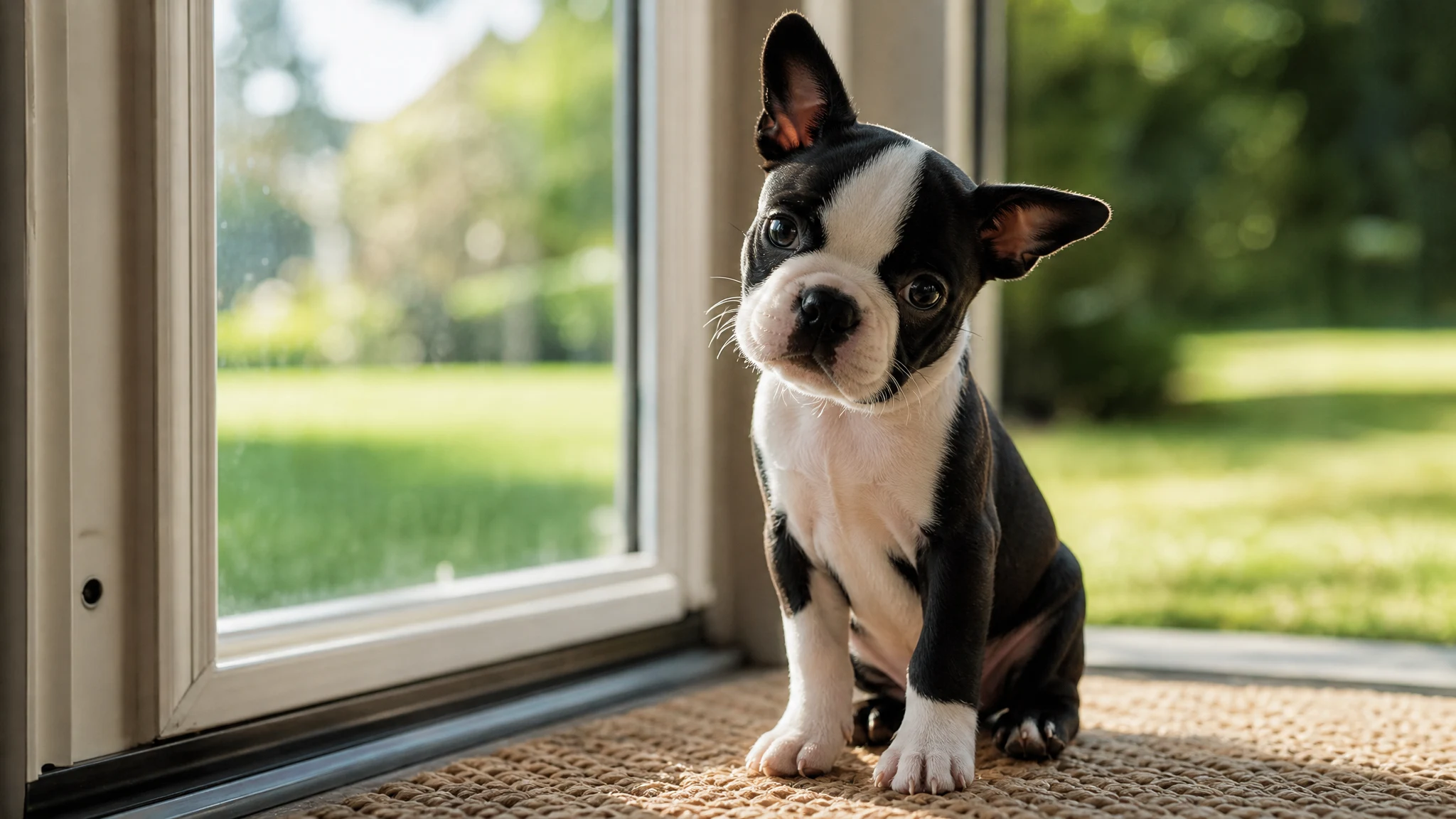
General training information. Every dog is an individual; for health or behavior concerns, see your veterinarian.
If you want to know how to potty train a Boston Terrier, the answer is the same as for most puppies: a steady schedule, lots of trips outside, and rewards at the right moment. What changes with this breed is the personality that comes along for the ride.
The Boston Terrier Club of America (BTCA) describes the breed as highly intelligent and quick to learn. PetMD adds that Bostons respond quickly to positive reinforcement but can have a mind of their own. That mix is useful for Boston Terrier potty training. A smart puppy catches on fast, and an independent one needs you to be consistent.
This guide walks through house training a Boston Terrier from the first day home. Individual dogs vary, so treat the timing as a guide and not a promise.
What You Need Before You Start
- A crate that is big enough for your puppy to stand, turn around and lie down in, but not much bigger. Too much room can make it easy to use one corner as a bathroom.
- Small, soft treats that your puppy can swallow in a second. Ask your veterinarian which treats suit your puppy.
- A leash and a collar or harness so outside trips stay businesslike.
- An enzymatic cleaner made for pet messes. Ordinary cleaners can leave a scent that draws your puppy back to the same spot.
- A playpen or baby gate to keep your puppy in a small, watched area.
- A notebook or phone app to log meals, naps and bathroom trips for the first week or two.
- Patience. It is the most important item on the list.
Why This Breed Calls for a Plan
The BTCA says Boston Terriers are companion dogs that need human contact and are not outdoor dogs. That has a practical effect. Your puppy will do best when potty training happens close to you, inside the house, with a person ready to take them out. A puppy left alone in a yard for long stretches is not learning much.
PetMD lists the breed's height as 10 to 12 inches at the shoulder and its weight as 12 to 25 pounds. You can expect a small dog. Check with your veterinarian about how often your own puppy may need to go out, since the sources we rely on do not give a bladder timetable.
The BTCA also notes that the breed is very active and playful. Excited play is often when a puppy forgets everything they learned. Watch for this after a play session.
Step-by-Step: How to Potty Train a Boston Terrier
Step 1: Pick one bathroom spot and one cue
Choose a patch of ground outside and take your puppy there on a leash every time. The smell of earlier visits helps the puppy get the idea.
Pick a short cue such as "go potty." Say it once, calmly, as your puppy starts to go. Over time the words can become a prompt. Do not repeat it over and over, which only turns it into background noise.
Step 2: Build a schedule around the day
A schedule-based plan works because puppies tend to need the bathroom at predictable times. Take your puppy out:
- First thing in the morning, before anything else
- Right after meals
- After waking from any nap
- After a play session or an exciting visit
- Before bed
- Any time you see signs such as sniffing in circles, whining or heading for a corner
In the early days, many families take a young puppy out every hour or two while awake, then stretch the gap as the puppy succeeds. Your veterinarian can tell you what is reasonable for your puppy's age and health.
Keep meals at set times. A puppy fed on a regular schedule is easier to predict than one who grazes all day. Ask your veterinarian how much and how often to feed.
Step 3: Go out with your puppy every time
Walk to the spot, stand still and stay quiet. Skip the chatting and the playing until your puppy has finished. Many puppies get distracted outdoors and then relieve themselves the moment they come back inside.
If nothing happens after a few minutes, go back in and keep your puppy close or in the crate for a short time. Then try again. This keeps a missed chance from turning into a puddle on the rug.
Step 4: Reward right away
The instant your puppy finishes, say a happy "yes!" and give a treat. Praise warmly. The reward has to come within a couple of seconds, while the puppy still connects it with the act. Treating after you have walked back to the door is too late.
Reward-based training is also the approach backed by the American Veterinary Society of Animal Behavior (AVSAB). PetMD notes that patience and games help with the Boston's independent streak, so a quick game after the treat can make going outside feel like fun.
Step 5: Use the crate as a resting place
Most dogs prefer not to soil the place where they sleep, which is why a crate helps. Use it for naps, for short times when you cannot watch your puppy, and overnight.
Make it a good place. Feed a few meals in there, toss in treats and give a safe chew. Never use the crate as punishment. The BTCA says the breed will languish without human contact, so a crate is not a place to leave a puppy for long hours. If you must be away for a long stretch, plan for someone to come and let your puppy out.
When you take your puppy out of the crate, go straight to the bathroom spot. Do not stop to play first.
Step 6: Supervise everywhere else
When your puppy is out of the crate, keep them in sight. A leash tied to your belt, a gated room or a playpen all work. A puppy who has free run of the house will find a quiet corner before you notice the signs.
As your puppy has more successful days, give more space a little at a time. If accidents return, go back one step for a while.
Step 7: Handle accidents without punishment
Accidents will happen. How you respond matters.
- If you catch your puppy in the act, calmly say "oops," scoop them up and take them outside. If they finish there, reward them.
- If you find a mess later, clean it with an enzymatic cleaner and say nothing to the puppy. A puppy cannot connect a scolding to something that happened minutes ago.
- Never rub a nose in a mess, yell or hit. These methods do not teach the puppy where to go. They can teach the puppy to hide when they need to go, which makes training harder.
Treat each accident as information. Ask what you missed: the timing, the signs, or too much freedom too soon.
Step 8: Add nighttime and weather routines
Young puppies often need a middle-of-the-night trip. Keep it dull: lights low, no play, a quick trip to the spot, a treat, then back to bed. Over time the need to go at night tends to fade, but check with your veterinarian if it does not.
Weather matters for this breed. PetMD says to take extra care in heat and humidity because of the flat face and the breathing issues that can come with it. On hot days, keep outdoor trips short and shaded, and bring your puppy back inside to cool off. If your puppy seems to struggle to breathe, call a veterinarian.
How Long Does It Usually Take?
There is no fixed timeline. Some puppies seem to catch on within a few weeks, while others take months to be reliable. The sources we use do not give a Boston Terrier timetable, so it is best to ask your breeder or veterinarian what is realistic for your puppy.
Several things can affect progress: your puppy's age when you bring them home, how consistent the household is, and how often there are slips in supervision. Setbacks are common, especially during growth spurts, moves, new family members or changes in routine. A calm return to the basics usually helps.
Tips for a Smart, Independent Puppy
- Keep sessions short and upbeat. The BTCA calls the breed quick to learn. A clever puppy can also get bored with repeating the same thing.
- Be consistent as a household. Everyone should use the same door, spot, cue and treat. If one person lets the puppy off the leash and another does not, the puppy will notice.
- Use games to keep trust. PetMD says the breed can have a mind of their own. A puppy who enjoys working with you is more likely to follow your lead.
- Watch for excitement. After play, visitors or a hard-charging zoomie session, head outside.
- Keep the first lessons basic. The BTCA says basic training is needed. Pair potty training with simple skills such as sit and come, and work on jumping up and play nipping, which the BTCA names as common without training.
Common Mistakes to Avoid
- Giving too much freedom too soon. A few good days do not mean the lesson is learned.
- Punishing accidents. It tends to cause fear and hiding, not learning.
- Rewarding late. A treat after you come back inside is not tied to the act.
- Skipping cleanup. Lingering scent can invite a repeat.
- Leaving the puppy alone outside. You cannot reward what you cannot see, and the breed is not an outdoor dog.
- Using pads and the yard at once without a plan. Mixed messages can slow learning. If you need pads because of your living situation, pick a plan and stick with it.
- Ignoring health. Frequent accidents, straining or sudden changes can have medical causes. Ask your veterinarian rather than guessing.
What Results Can You Expect?
With a steady schedule, quick rewards and close supervision, many Boston Terrier puppies begin to show a clear pattern within the first few weeks. You may notice fewer accidents, a puppy who heads for the door, or one who waits by it. That does not mean the puppy is finished learning, and progress is rarely a straight line.
Expect to keep supervising for some time after the first good stretch. Results depend on your puppy, your routine and your consistency, so no outcome can be promised. If you feel stuck, ask your veterinarian to rule out health causes, and consider asking a qualified reward-based trainer for help.